Sunday night, I went to a casino for the first time in my life, where Stride and I miraculously won $250 playing $5 blackjack. I posted a facebook status to that effect and today, this ad showed up on my homepage:
O facebook, you kill me!
Wednesday, August 18, 2010
Facebook Win!

Tuesday, August 17, 2010
Guest Blogging
Look for my guest blog about Tahquamenon Falls to appear on onetravel.com (offering cheap tickets and other travel info) next Thursday, August 26th! My article can be found on the onetravel blog.
Tuesday, July 27, 2010
The Pleasant Penninsula: Drummond Island
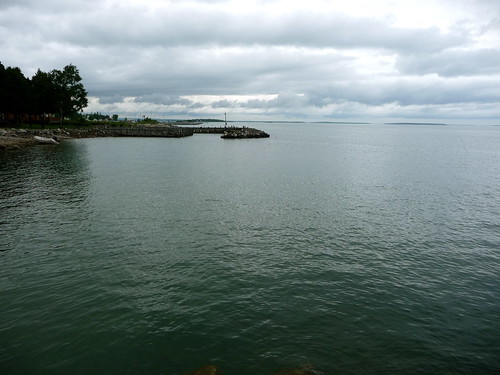
The last day of our northerly vacation coincided with the first day that my parents were going to be in the UP for their annual getaway, so we decided to crash their party on Drummond Island.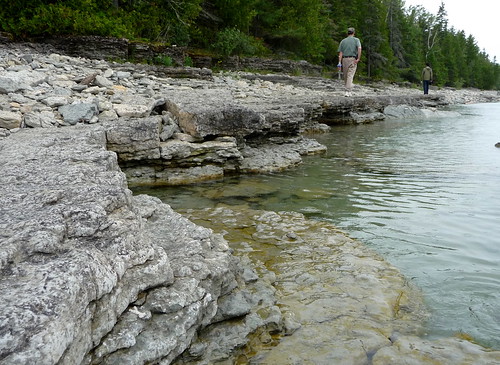
It was Mom's idea to go the the Fossil Ledges on the northeast edge of the island. The ledges are precisely what they sound like -- a coastline of layered stone eaten slowly away by Lake Huron. The result of this slow-motion shattering is a series of rocky terraces stretching out into the water, blurring the border between the island and the lake in a truly entrancing way.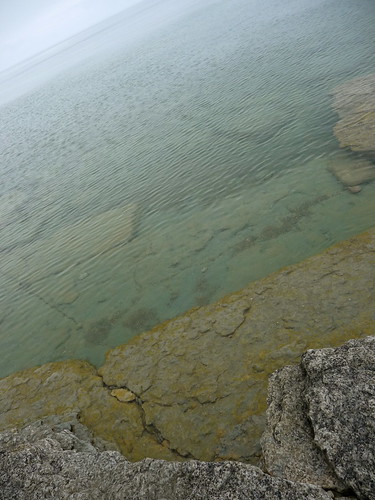
Of course, like most places worth going to, the Fossil Ledges are on what we might call the path less traveled. You have to make your way through Maxton Plains, a nature preserve inhabited by a rare combination of plants and animals. If you don't get eaten by any bears, you can continue north-ish on the dirt road, which gets progressively rockier and narrower.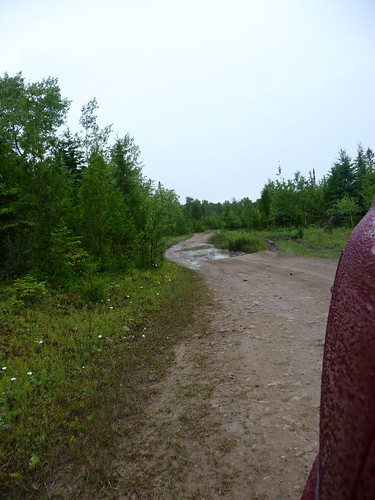
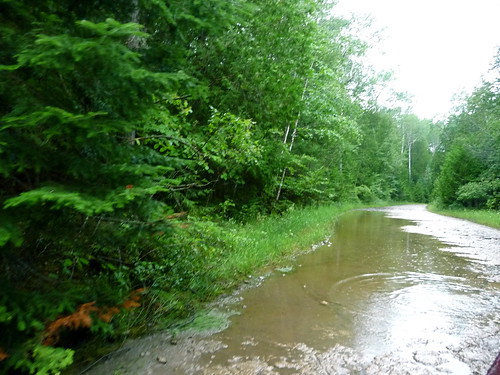
To add to the fun of our trip, recent rain had flooded several parts of the road so that Dad had to guess how deep the water was and where the rocks were. The good news is that the road is basically limestone, not mud, so (as we were reassured several times) "you won't sink." However, that didn't do much to relieve our concerns about flooding the engine, popping a tire, or eviscerating the car on the large, frequently submerged, rocks.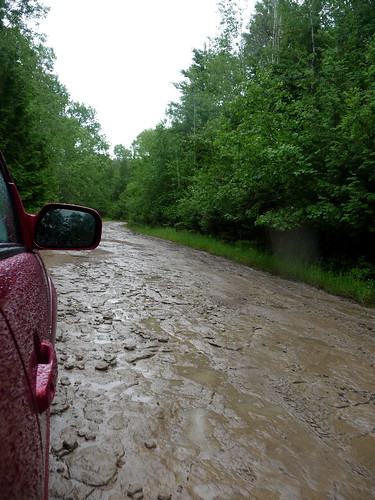
If you ever attempt this drive, we recommend doing so in a high-riding vehicle like a Jeep or a truck. Our research shows that with some ingenious navigating a Pontiac Vibe can successfully make the trip, but as we all know, not everything that can be done should be.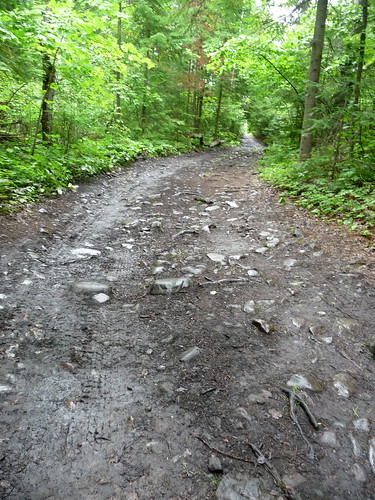
When we got to the final drive leading to the Fossil Ledges -- a drive which is unmarked and easy to miss unless there happen to be other cars parked near it -- we had to abandon the Vibe and go on foot because the rocks were just too imposing to risk their wrath any longer.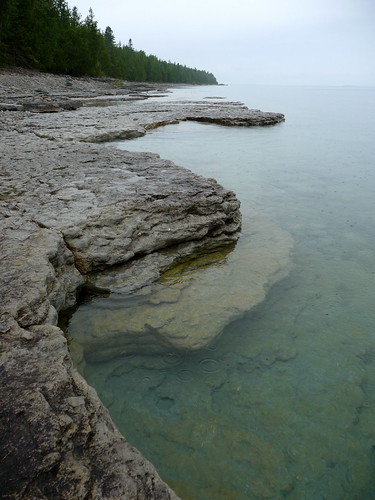
Once we finally got to the ledges, we discovered that it was well worth the perilous journey, and we spent quite a while wandering up and down the mile-long stretch of coast, picking through the rocks to find fossils of shells and coral and all manner of creeping little denizens of the waves.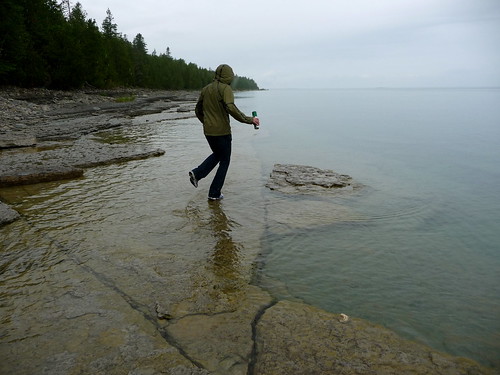
Even despite a little rain, we spent over an hour strolling this uniquely beautiful little stretch of coast, taking photos and hunting for cool fossils and just enjoying the fresh air and the water.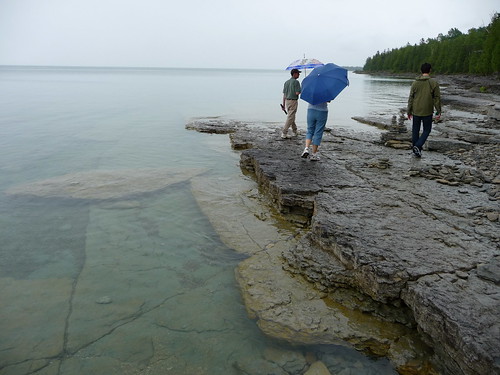
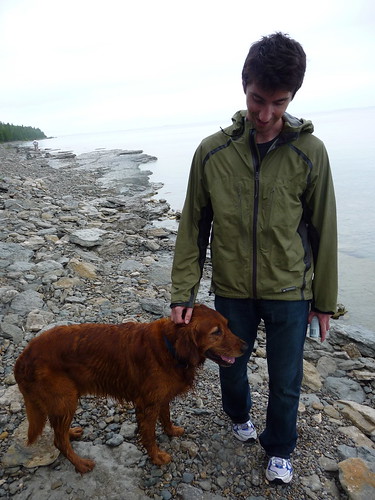
For the most part, the rough drive makes the Fossil Ledges a fairly secluded spot, but Stride did make one new friend while we were out there and few people we passed on the way all stopped to exchange information and advice about navigating the road, in typical friendly Yooper style.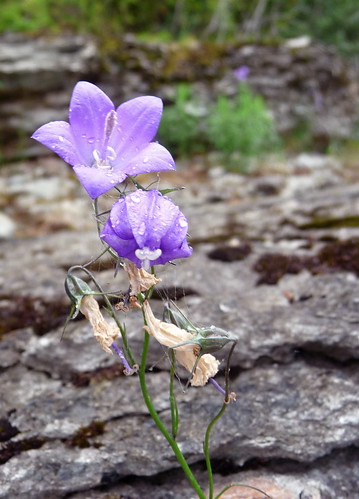
Times are not good in Michigan right now. The economy is rough and a lot of people are struggling, but this trip has reminded me that we still have a lot of incredible things to be proud of. Here's to you, Pleasant Peninsula!
Sunday, July 25, 2010
The Pleasant Penninsula: Tahquamenon Falls
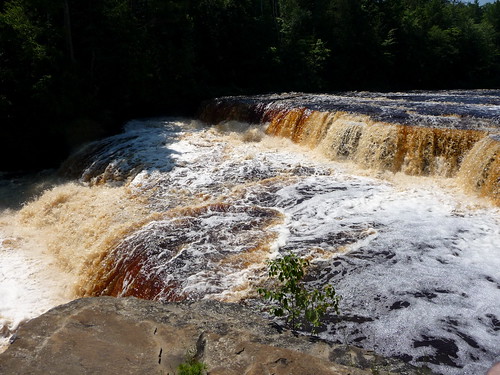
On Sunday, we took on one of the crown jewels of the Upper Peninsula: Tahquamenon Falls, a series of rapids and waterfalls in the Tahquamenon River that are extraordinary not just for their size and beauty but also for their unique golden-red color. Cedar, hemlock, and spruce trees in the surrounding forest and swamps infuse the water with tannin (or tannic acid), the same astringent found in grapes that makes your tongue stick to the roof of your mouth a little bit after a sip of good wine. The acid has two important effects on the water -- it softens it so that the falls produce prolific amounts of foam and it gives it this incredible coloring. While the intensity of the color varies throughout the year, at its richest, the whole river looks like a flow of liquid amber.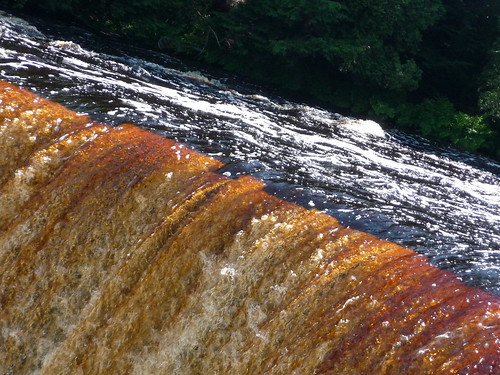
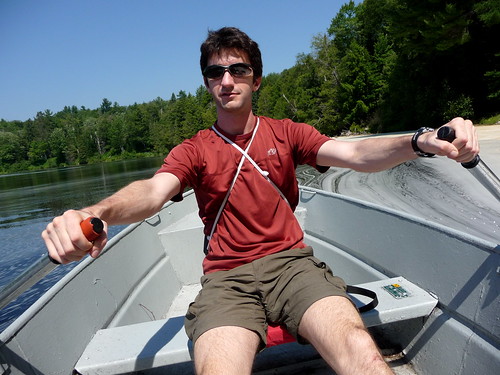
The Lower Falls are a series of several rapids that flank a small island. For the best view, you have to rent a rowboat from the park and heave-ho your way to the island, which has a little hiking path to follow and allows you to get right next to the water. Fair warning: The water is very accessible from the island and we saw several people wading in it and allowing their small children to wade in it. This is a really effective way to lose a small child as the river's sandstone bed can be extremely slippery and the current, which seems harmless enough in the shallows, gets treacherously quick around the rapids. Even a grown man can easily lose his footing and end up sleepin' with the fishes, so keep to the shore and keep a close eye on your kids.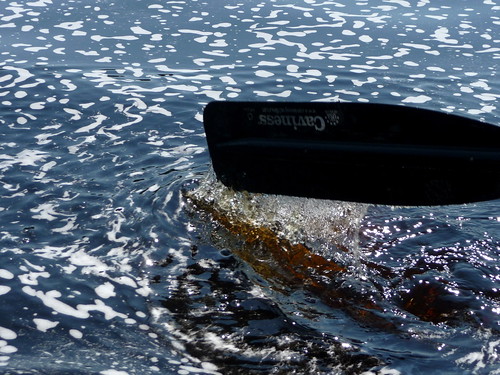
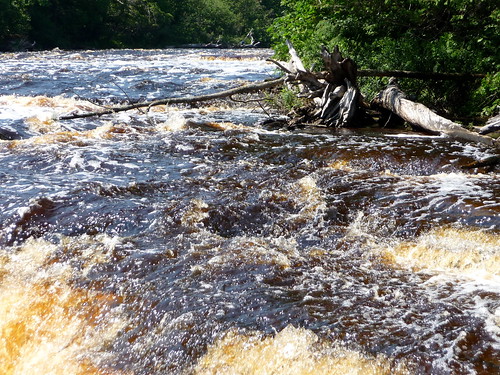
Shallow but fast-moving water through the Lower Falls. All the park signs through this area say "Beautiful but Treacherous." 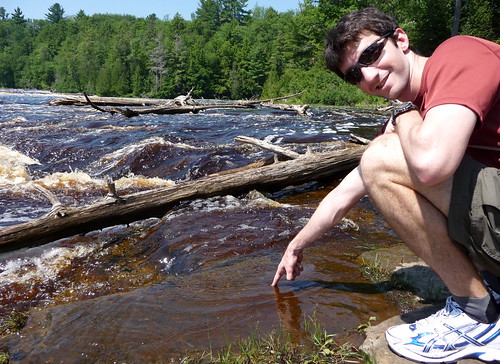
This is as far into the water as we got, even though it was a hot day and the river was tempting. Safety first, boys and girls!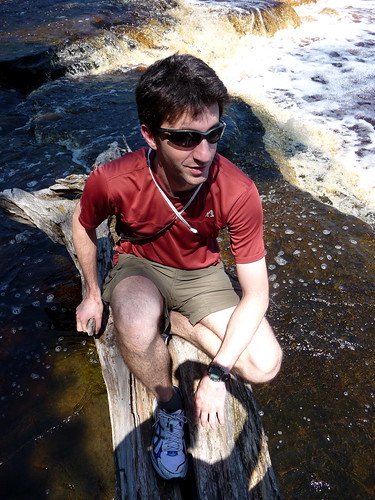
Disclaimer: Stride is a professional adventurer. Do not attempt this at home.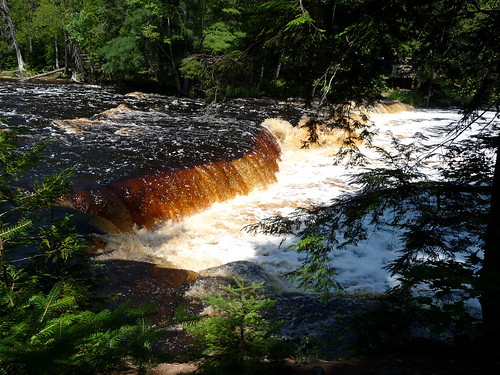
There's about a four-mile hike from the Lower Falls to the Upper Falls. This path starts out as a well-maintained boardwalk along the river but quickly becomes a rugged, often overgrown, trek through the woods with several steep inclines. There are a few gorgeous vistas and some beautiful stretches along the river that make it worthwhile, but be prepared with some good hiking shoes, bug spray, water, and snacks, and keep in mind that once you get to the Upper Falls, you've got to get back.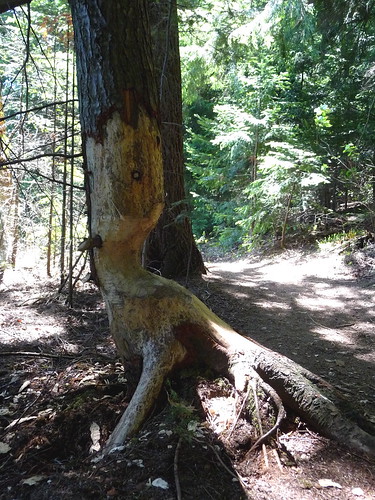
Along the way to the Upper Falls, we spotted the work of one Michigan's original lumberjacks. He apparently got distracted and couldn't be bothered to finish off this poor tree.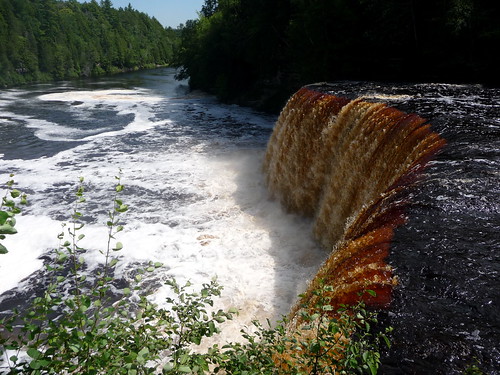
The Upper Tahquamenon Falls is one of the largest waterfalls east of the Mississippi, second only to Niagara. Obviously, the fifty-foot drop makes this waterfall a bit more formidable than the rapids downstream, so you can only approach it by standing on a lookout platform.
After we had taken in the view and the foam and the incredible amber water, we got an anticlimactic bite to eat at the nearby lodge and then started the four mile hike back to our campsite at the Lower Falls.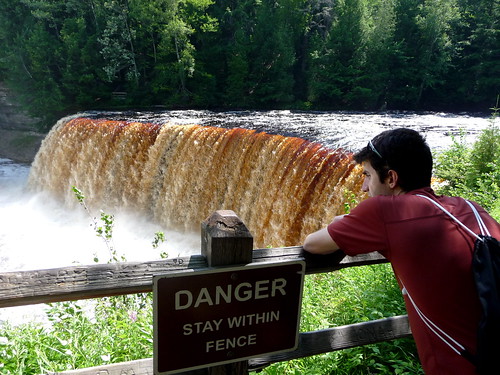

The main strip of Paradise, MI, the town closest to Tahquamenon Falls State Park, is quite the booming metropolis, sporting approximately two greasy spoon diners, one chainsaw art gallery, and this root-beer-stand-turned-trailer-lot. We settled on breakfast at a blueberry-bedecked diner called the Berry Patch. Imagine, then, our dismay when we discovered they didn't have any blueberry pancakes. Not my idea of Paradise. :(
But it didn't matter anyway because Monday morning we were off to our next adventure at Drummond Island
Friday, July 23, 2010
The Pleasant Penninsula: Whitefish Bay

With near 3300 miles of coastline, the state of Michigan is home to over 115 lighthouses, each of which is a unique and beautiful spot to stop and enjoy the water and the view. Point Iroquois Lighthouse, located on the southern rim of Whitefish Bay, is no longer operating, but part of the original structure has been converted into a small museum and the rest into a private residence. The grounds and the building are extremely well-kept, and both the museum and the lighthouse tower are open to the public, so you can hike up the 72-step spiral staircase for a fantastic panorama of the American and Canadian coastlines and any freighters passing through from the Soo Locks into Lake Superior.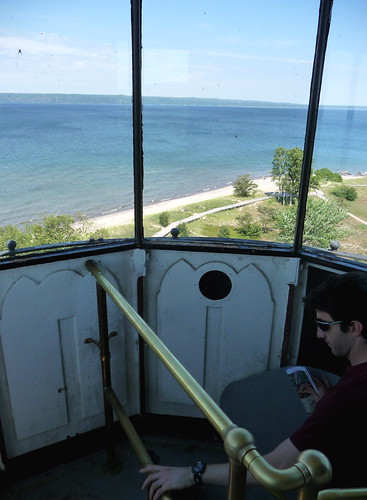

From the light, you can stroll down the boardwalk to the beach. Michigan has almost endless stretches of pristine, sandy beaches where you can stretch out in the sunshine or build castles or bury your toes among the warm, sparkling little grains. Point Iroquois is not one of them.
Because we are tough, we braved the rocky shore to cool our heels in the bay and check out some of the beautiful (if slippery and unforgiving) stones that give it its kaleidoscope of colors. Most of the stones here are too big or too round for skipping, but it's a great spot for agate-hunting. I do recommend you bring your Crocs along though.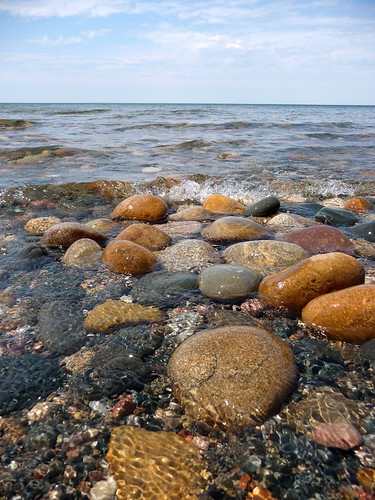
After picking our way gingerly back up to the car, we continued around the bay to Whitefish Point, home to a larger, less-photogenic lighthouse and a much more walkable beach.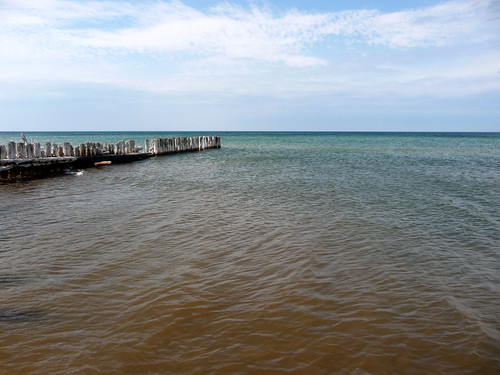
With skipping stones a-plenty and a sweeping view of Lake Superior, Whitefish Point is an ideal place to stroll. Most times of the year, you can't stand in the water for more than a few seconds without going numb up to your ankles, but over the Fourth, it was surprisingly hot and the normally frigid Lake Superior was actually refreshing.
In addition to the lighthouse itself, Whitefish Point boasts a little complex of buildings that include the Great Lakes Shipwreck Museum (with an admission cost of $12/head, which Stride declared was too much money to see "stuff that's wrecked") and a fudge shop. He doesn't look very impressed with the fudge either...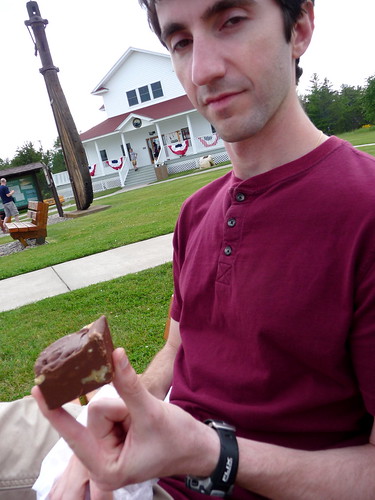
On the drive back, we stopped for a coffee at the Dancing Crane, and had one of those rare moments of truly finding a diamond in the rough.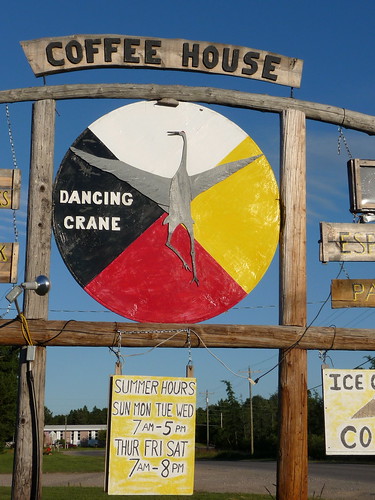
Stride got a fruitylicious smoothie and I had my standard latte made from their home-roasted beans. While we sipped, we played with the games, toys, and other gadgets they have scattered all over the place. Stride beat me handsomely at checkers and we both struggled to master Gravitation, the greatest game of all time.
If you're in the area, I definitely recommend that you pop in here and enjoy the great service, food, and atmosphere for a bit.
Subscribe to:
Posts (Atom)


 Stumble It!


